Indoor Air Quality Assessment
Indoor Air Quality Assessments in Honolulu, HI


If you suspect an issue with the quality of the air in your home or building, it's time to take action. Poor Indoor air quality (IAQ) can have a significant impact upon the health and productivity of the occupants of residential, commercial, institutional, and industrial buildings. It's vital to address air quality concerns before they become problematic, so to improve the health of your building and its occupants, contact the AirCare Hawaii team today to schedule your Hawaii IAQ assessment.

What we test for
Our indoor air quality assessment can also test for various substances in the air, including mold, allergen, and chemicals.
When the results come in, we'll make a detailed report breaking down everything and fully explain to you the different irritants found in the air.
What is an indoor air quality assessment?
An Indoor Air Quality Assessment involves taking data (or readings) of an indoor environment to potentially understand all contributing factors that can be the cause of multiple health issues in certain individuals. This can be done in residential homes but is primarily done on commercial projects. Mold is not always the culprit! When dealing with multiple individuals sensitivity, it isn’t always that easy to understand or pin point.
When providing these assessments, data is collected to understand:
- Relative humidity -the amount of moisture in the air
- Particle counts - a particle counter will identify how many airborne particles of a certain size are present in the environment
- Temperature - too hot, too cold?
- Ventilation and thermal controls - air flow, stagnant air, not enough outside air being mixed
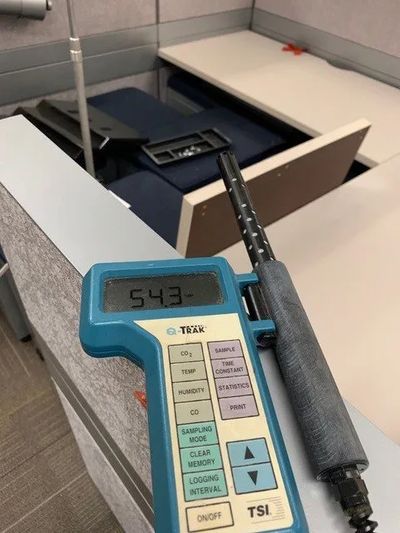
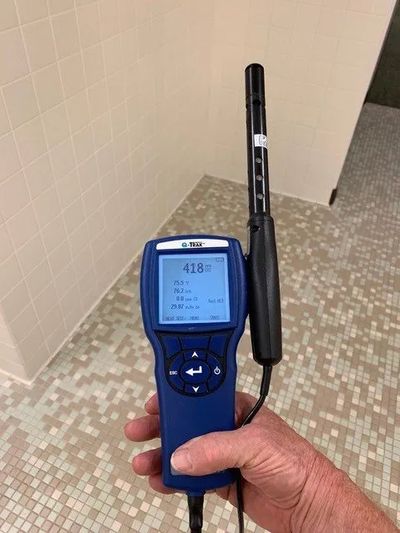
- CO2 levels - Carbon Dioxide emitted by humans at high levels indoors may cause occupants to grow drowsy, to get headaches, or to function at lower activity levels.
- TVOC levels - Total Volatile Organic Compounds (gasses, chemicals, etc.)
- Air and surface sampling for mold and other sources of allergens such as pet dander or pest infestation
As a Honolulu indoor air quality consulting company, AirCare Hawaii prioritizes each project by understanding the indoor environment as a whole by looking at all factors and conducting hypothesis testing. Other companies may only focus on one potential problem. By centering on a single concern, and performing sampling that only focuses on trying to prove that the particular issue is the culprit, then all the other potential contributing factors are being ignored. A limited indoor air quality assessment can determine a course of action to a pathway of better health, comfort and well-being of building occupants.